

甲状腺结节
Symptoms, Diagnosis and Treatment
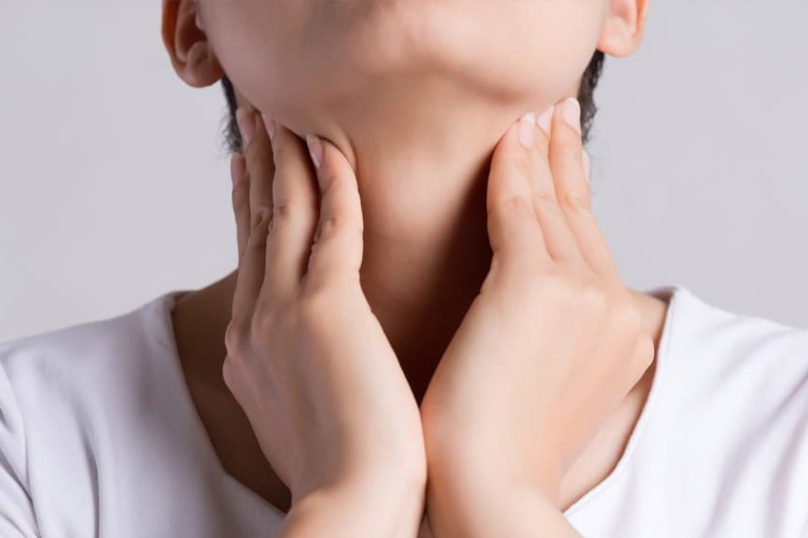
Thyroid nodules are solid or fluid-filled lumps (cysts) that form within the thyroid gland. This butterfly-shaped gland sits in the lower neck and plays an important role in regulating metabolism.
When multiple nodules are present within the same gland, the condition is referred to as a multinodular goitre.
These nodules may not give rise to symptoms and are commonly detected during routine health screenings. In some cases, however, they may become noticeable as a visible lump in the throat.
Although most thyroid nodules are benign, some may enlarge over time, cause discomfort when swallowing or raise concern for thyroid dysfunction or cancer.
If you have a thyroid nodule, evaluation by an 耳鼻喉科专家 with head and neck expertise can help clarify the diagnosis and guide next steps.
Are thyroid nodules cancerous?
Most thyroid nodules are non-cancerous and may represent an overgrowth of normal thyroid tissue, fluid-filled cysts or benign (non-cancerous) tumours known as adenomas. However, a small proportion can be malignant.
The risk is slightly higher in individuals with a history of radiation exposure to the head or neck or those with a family history of thyroid cancer.
Although most nodules are not an immediate cause for alarm, it is important to monitor them over time. Any noticeable changes in size, shape or texture may require further evaluation as rapid growth could indicate cancer.
Thyroid nodule symptoms that warrant further evaluation
Thyroid nodules typically do not initially cause symptoms. However, when a nodule grows large or presses against nearby structures in the neck, certain symptoms may start to appear.
These signs may warrant further assessment by a specialist:
Visible lump in the neck
A noticeable swelling in the lower front of the neck that may enlarge over time | Sensation of throat tightness or fullness
A feeling of pressure or tightness, especially when lying down or swallowing | Difficulty swallowing or breathing
Larger nodules may press on the oesophagus or windpipe, causing discomfort |
Persistent hoarseness or voice changes
May indicate involvement of the nerve that controls the vocal cords | Unexplained weight loss, palpitations or heat intolerance
Signs that may suggest an overactive thyroid (hyperthyroidism) | Fatigue, weight gain or sensitivity to cold
Symptoms that may indicate underactive thyroid function (hypothyroidism) |
If you notice any of these changes, especially in the presence of a known thyroid nodule, it’s advisable to seek further evaluation to determine whether treatment is necessary.

王耀光博士
资深耳鼻喉科专家及鼻科医生
王耀光医生是一位经验丰富的耳鼻喉科专家,拥有超过20年的临床经验。他以优异的成绩毕业于都柏林大学三一学院,并于2008年完成耳鼻喉科专科培训,在全国毕业考试中荣获金奖。之后,他前往美国匹兹堡大学医学中心,接受了鼻科学和内镜颅底外科的亚专科进修培训。.
在进入私人执业领域之前,翁医生曾担任高级顾问和 临床服务主任 在 国立大学医院 (新加坡国立大学医院),他曾共同领导内窥镜颅底项目。他还持有…… 睡眠医学硕士 以及过敏学研究生证书。.
Causes of thyroid nodules
Thyroid nodules can form for various reasons. In most cases, they are benign cysts or growths that arise due to changes within the thyroid gland over time. Certain conditions are more commonly associated with nodule formation, including:
- Multinodular goitre – where multiple nodules develop within the same gland, often linked to thyroid overactivity, iodine imbalance or age-related changes
- Thyroid cysts – fluid-filled nodules that are usually benign
- Hashimoto’s thyroiditis – a chronic inflammatory condition that can cause irregular growth or scarring within the gland
- Colloid nodules – common overgrowths of normal thyroid tissue
Identifying the underlying cause helps guide whether a nodule can be safely observed or requires further investigation.
Diagnosing thyroid nodules
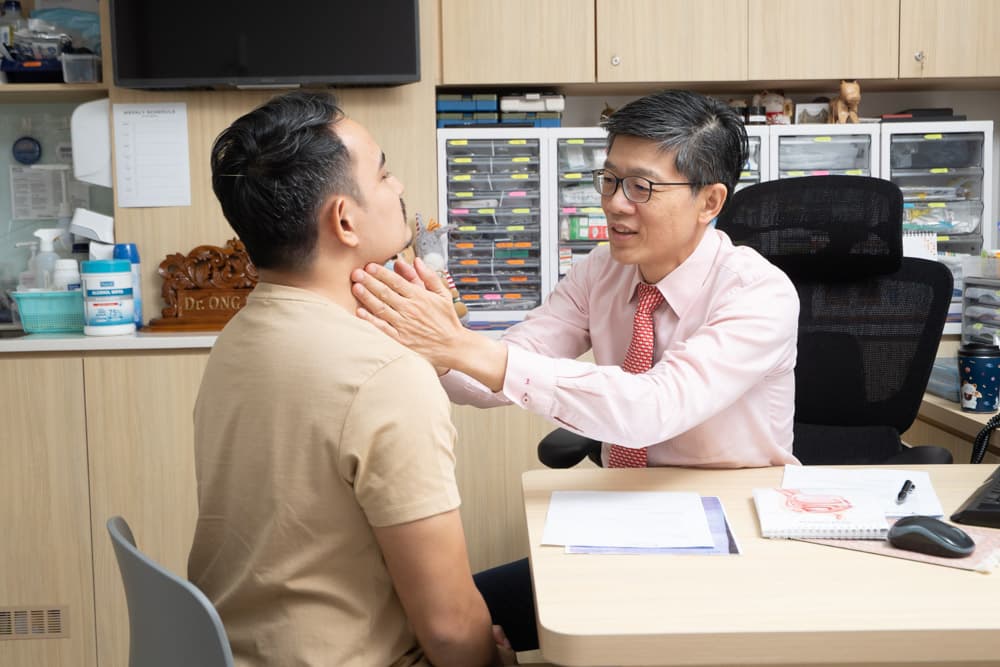
Evaluation of a thyroid nodule begins with a physical examination, followed by imaging and, if needed, tissue sampling.
The goal is to assess whether the nodule is benign, suspicious or interfering with thyroid function.
- Neck ultrasound is the first-line imaging tool, offering detailed information about the nodule’s size, shape and internal features.
- Fine Needle Aspiration Biopsy (FNAB) may be recommended for nodules with concerning ultrasound characteristics or those above a certain size. This in-clinic procedure samples cells from the nodule to determine if further treatment is needed.
- Thyroid function tests are done to check if the gland is underactive or overactive.
- In some cases, additional imaging such as a thyroid scan or CT may be advised.
These investigations help ensure that treatment decisions are based on an accurate understanding of the nodule’s nature.
Thyroid nodules treatment and management
Most patients with benign thyroid nodules (not causing symptoms) do not require specific treatment. In such cases, regular ultrasound follow-up is usually sufficient to monitor for changes over time.
However, if a nodule causes symptoms such as discomfort, difficulty swallowing or visible enlargement, or if cancer is suspected, further treatment may be necessary. The choice of treatment depends on the size, location and nature of the nodule.
Surgery remains the mainstay of treatment for symptomatic or suspicious nodules. This may involve:
- Thyroid lobectomy (also known as hemithyroidectomy) — removal of one side of the thyroid gland
- Total thyroidectomy — removal of the entire thyroid gland
Thyroid surgery is generally safe and performed under general anaesthesia. Most patients recover well with minimal downtime. If the entire gland is removed, lifelong thyroid hormone replacement will be required.
Your ENT surgeon will guide you through the decision-making process, explain the potential risks and benefits, and ensure all your questions are fully addressed before proceeding.
Guiding You Through Persistent Tonsillar Challenges

If you’ve discovered a thyroid nodule or have been monitoring one over time, knowing when to seek further input can make all the difference. A detailed review with an ENT specialist can offer clarity, reassurance and a plan that’s tailored to your situation.
If you’re considering a second opinion or would like to arrange a consultation, our clinic is here to support you every step of the way.
患者信息
Can thyroid nodules go away on their own?
Is a thyroid nodule the same as a goitre?
Do thyroid nodules affect my voice permanently?
Your ENT specialist will assess the relationship between the nodule and the surrounding nerves.