
我们的服务

鼻中隔偏曲

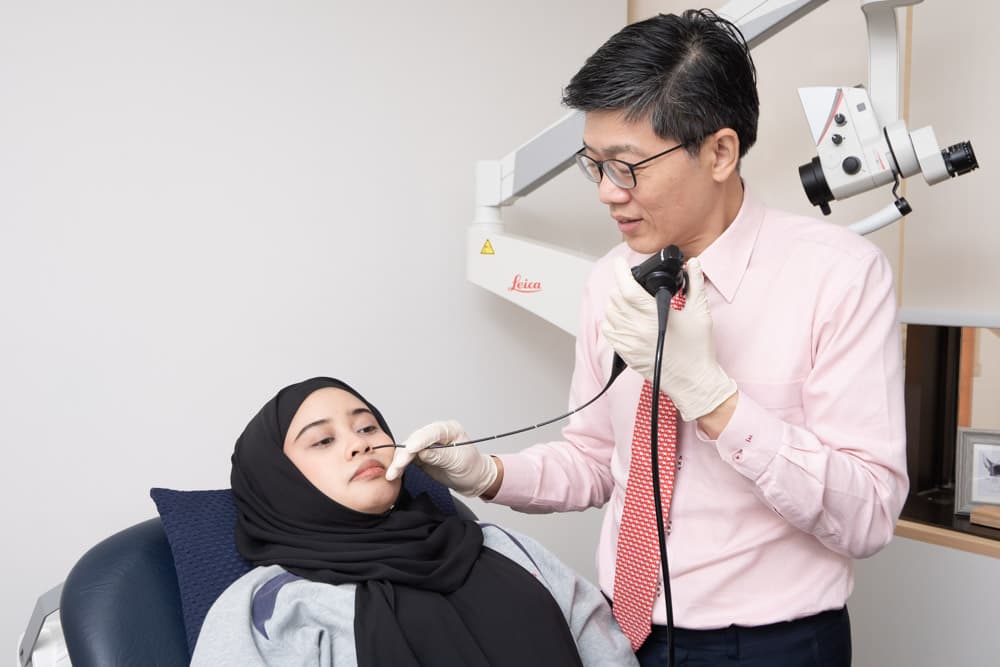
耳鼻喉专科医生正在对患者进行鼻部检查,以评估鼻中隔偏曲情况。

鼻中隔偏曲

Understanding Symptoms, Causes and Septoplasty Treatment Options

A 鼻中隔偏曲 occurs when the thin wall of cartilage and bone that separates the two nasal passages is displaced to one side.

When this partition is significantly bent, it can narrow one or both nasal airways, leading to persistent nasal blockage, difficulty breathing through the nose, sinus infections 或者 disturbed sleep.

Mild deviation may not require treatment. However, when symptoms affect daily comfort or sleep quality, further assessment is advisable.

Management may involve medication to control inflammation or a surgical procedure known as septoplasty to straighten the septum and improve airflow. Read on to learn more about septal deviation and the available treatment options in Singapore.

What is a Deviated Septum?

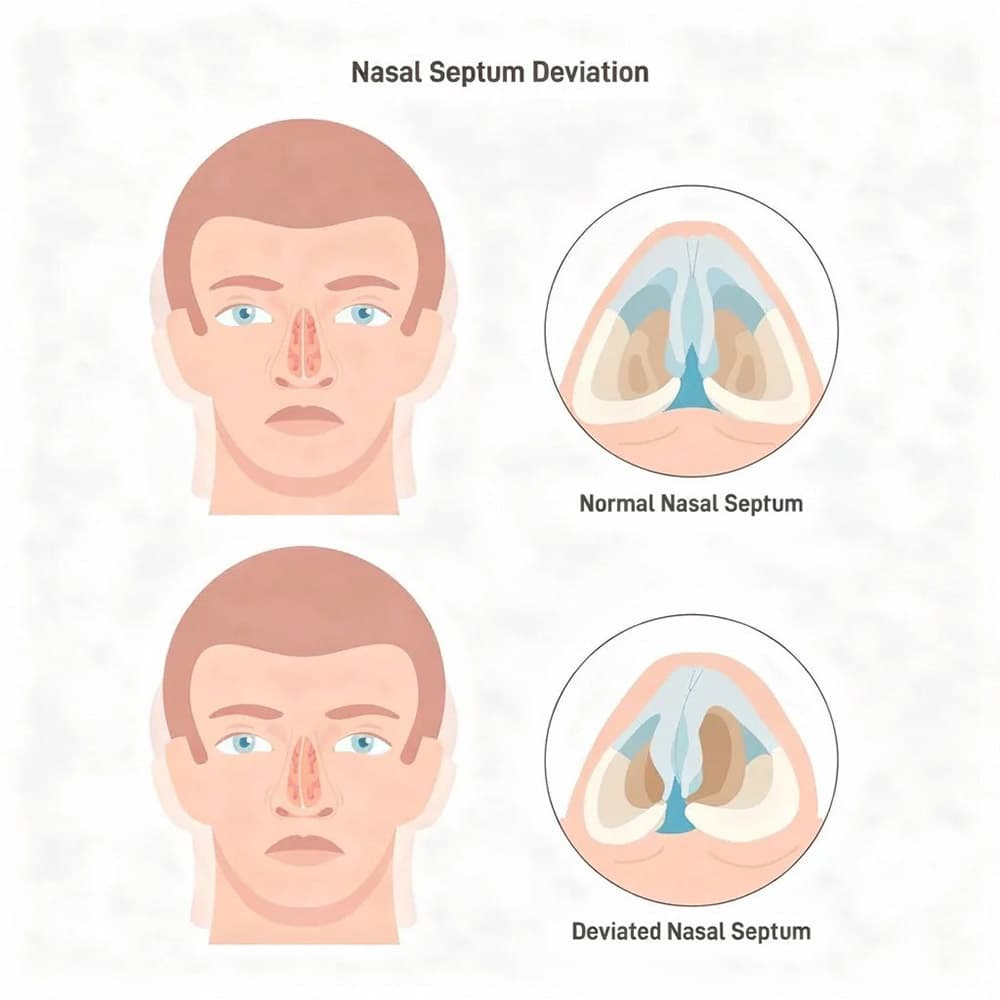
Illustration comparing normal nasal septum and deviated nasal septum showing narrowed airway on one side

nasal septum is the internal partition that divides the nose into left and right passages. Ideally, it sits centrally, allowing air to flow evenly through both sides.

In many people, the septum is slightly off centre. This is common and often does not cause problems. A 鼻中隔偏曲 becomes clinically important when the displacement is pronounced enough to obstruct airflow or interfere with sinus drainage.

Unlike 鼻甲肥大, which involves soft tissue swelling, a deviated septum is a structural misalignment. The cartilage and bone are physically bent. In practice, however, both conditions often coexist and together contribute to long-term nasal obstruction.

Symptoms of a Deviated Septum

Not everyone with a 鼻中隔偏曲 experiences symptoms. In fact, mild deviation is common and may go unnoticed for years.

Symptoms tend to develop when the structural narrowing significantly affects airflow or interferes with sinus drainage. In some individuals, symptoms appear gradually. Others notice worsening nasal obstruction after a cold, allergy flare or injury.

Because septal deviation is a structural issue, symptoms often feel persistent rather than episodic. However, the severity may fluctuate depending on inflammation within the nasal lining.

您可能会经历:

Persistent nasal blockage


One side of the nose may feel constantly blocked or narrower than the other.

Difficulty breathing through the nose


Breathing may feel restricted, especially during sleep, exercise or when lying down.

Recurrent sinus infections or facial pressure


Impaired sinus drainage can contribute to repeated infections or a sense of facial heaviness.

Snoring or mouth breathing


Ongoing nasal obstruction often leads to mouth breathing and disrupted sleep.

Nosebleeds


Altered airflow may dry the nasal lining, causing crusting or occasional bleeding.

Headaches or facial discomfort


Contact between internal nasal structures may trigger localised discomfort.

Many patients also report that their nasal blockage alternates in intensity. While the underlying deviation remains fixed, normal swelling and shrinking of the nasal lining can make symptoms feel more pronounced at certain times.

If these symptoms are persistent, worsening or affecting sleep and daily comfort, further assessment may help determine whether structural deviation is contributing to your nasal obstruction.

Ong-Yew-Kwang 博士高级牙髓和颅骨1
负责您护理的专家

王耀光博士

资深耳鼻喉科专家及鼻科医生

王耀光医生是一位经验丰富的耳鼻喉科专家,拥有超过20年的临床经验。他以优异的成绩毕业于都柏林大学三一学院,并于2008年完成耳鼻喉科专科培训,在全国毕业考试中荣获金奖。之后,他前往美国匹兹堡大学医学中心,接受了鼻科学和内镜颅底外科的亚专科进修培训。.

在进入私人执业领域之前,翁医生曾担任高级顾问和 临床服务主任国立大学医院 (新加坡国立大学医院),他曾共同领导内窥镜颅底项目。他还持有…… 睡眠医学硕士 以及过敏学研究生证书。.

Causes of a Deviated Septum

A deviated septum may arise from:

  • Congenital development, where the septum forms unevenly
  • Growth-related changes during adolescence
  • Previous nasal trauma from sports injuries, falls or accidents
  • Prior nasal procedures

In some individuals, the deviation may have been present for years before symptoms became noticeable.

Even a moderate deviation can become symptomatic when combined with chronic inflammation. For example, patients with 过敏性鼻炎 may develop turbinate swelling, which further narrows an already tight nasal passage.

Over time, the turbinate on the wider side may enlarge in response to airflow imbalance. This compensatory change can worsen overall obstruction.

Understanding these contributing factors is important because treatment often needs to address both the structural deviation and the surrounding inflammation.

How is a Deviated Septum Diagnosed?

Diagnosis begins with a detailed consultation and nasal examination.

Your 耳鼻喉科专家 will discuss your symptoms, how long they have been present and whether they vary with allergies, infections or environmental triggers.

A history of nasal injury or long-standing one-sided obstruction can provide helpful clinical clues.

A focused examination of the nasal passages is then performed. In many cases, septal deviation can be identified during anterior rhinoscopy.

For a more comprehensive assessment, a 鼻内窥镜检查 may be carried out in-clinic.

This allows direct visualisation of the septum, turbinates and sinus openings, helping to determine:

  • The location and degree of septal deviation
  • Whether the septum is contacting adjacent structures
  • If turbinate enlargement is contributing to obstruction
  • Whether there are signs of chronic sinusitis or nasal polyps

Imaging, such as CT scanning, is not routinely required. It may be considered when sinus disease is suspected or when surgical planning is necessary.

A careful evaluation ensures that symptoms are accurately attributed to structural narrowing rather than inflammation alone.

Can a Deviated Septum Improve Without Surgery?

The structural bend of the septum does not correct itself over time.

However, symptoms may fluctuate depending on the level of inflammation within the nasal lining. When allergies are well controlled or infection settles, breathing may feel temporarily improved even though the underlying deviation remains.

If nasal blockage persists despite appropriate medical therapy, it suggests that the structural component is likely playing a significant role.

In such cases, further discussion about treatment options may be appropriate.

Deviated Septum Treatment

The treatment for a deviated septum is guided by symptoms and the degree to which nasal obstruction affects daily activities, sleep or sinus health.

Non Surgical Management

For patients with mild to moderate symptoms, treatment initially focuses on reducing surrounding inflammation. Options may include:

  • Regular saline nasal irrigation to improve nasal hygiene
  • Intranasal steroid sprays to reduce mucosal swelling
  • 抗组胺药 where allergic rhinitis is present

These measures do not straighten the septum itself, but they may improve airflow by reducing turbinate swelling and nasal lining inflammation.

When symptoms remain troublesome despite consistent medical treatment, structural correction may be considered.

Septoplasty Surgery

Septoplasty is a procedure performed to straighten the deviated septum and improve nasal airflow.

The surgery is carried out through the nostrils, without external incisions. The deviated portions of cartilage and bone are reshaped or repositioned to achieve a more central alignment and wider nasal passage.

The aim of septoplasty is to improve nasal breathing and support better sinus ventilation. It does not usually alter the external appearance of the nose unless performed alongside cosmetic rhinoplasty.

In some patients, septoplasty may be combined with turbinate reduction when both structural deviation and soft tissue enlargement contribute to obstruction.

Suitability for surgery depends on individual anatomy, symptom burden and overall nasal structure, which can be carefully assessed during consultation.

Concerned about a deviated septum?

新加坡伊丽莎白山医疗中心高级鼻窦和颅底中心的团队

If you have persistent nasal blockage or difficulty breathing through one side of your nose, a specialist assessment can help clarify whether septal deviation is contributing to your symptoms and discuss appropriate treatment options.

At Advanced Sinus & Skull Base Centre, a structured evaluation of your nasal anatomy is performed to determine the degree of septal deviation and whether other factors such as turbinate enlargement or sinus inflammation are also present. 

Management is tailored to your individual symptoms, whether through medical treatment or consideration of septoplasty where appropriate.

可提供评估和第二意见预约服务。.

患者信息

Is a deviated septum common?

Yes. Mild septal deviation is common and often does not cause symptoms. It becomes clinically significant when it narrows the nasal airway enough to affect breathing or sinus drainage.

Can a deviated septum cause sinus infections?

It can. When the septum narrows sinus drainage pathways, mucus clearance may be affected. This can increase the risk of recurrent or persistent sinus infections in some individuals.

Why does my nose feel blocked on one side all the time?

A deviated septum often narrows one nasal passage more than the other. This can create a constant sensation of obstruction on one side, even when there is little or no mucus present.

Can allergies make a deviated septum feel worse?

Yes. Swelling from allergic rhinitis can further narrow an already tight nasal passage. In such cases, symptoms may fluctuate depending on allergy control.


Can a deviated septum cause headaches?

In some individuals, a significantly deviated septum may create internal contact points within the nasal cavity. These may contribute to facial discomfort or headache in selected cases.

Can a deviated septum affect breathing during exercise?

It can. Reduced nasal airflow may become more noticeable during exertion, when the body requires increased airflow.

Is a deviated septum visible from the outside?

Not necessarily. Many septal deviations are internal and do not alter the external shape of the nose.

How do I know if my nasal blockage is structural or due to inflammation?

Persistent one sided obstruction that does not fully improve with nasal sprays may suggest a structural component. A clinical examination and nasal endoscopy can help differentiate between septal deviation and inflammatory causes.

How long does it take to notice improvement after septoplasty?

Breathing may initially feel blocked due to swelling in the first one to two weeks. As healing progresses and internal swelling settles, airflow typically improves gradually over several weeks.

Can a deviated septum return after surgery?

Depending on the site of deviation, some septums (especially anterior septal deviation) may not be able to completely straighten after the surgery. It is important to discuss this further with your doctor.