

腺样体肥大(腺样体增大)
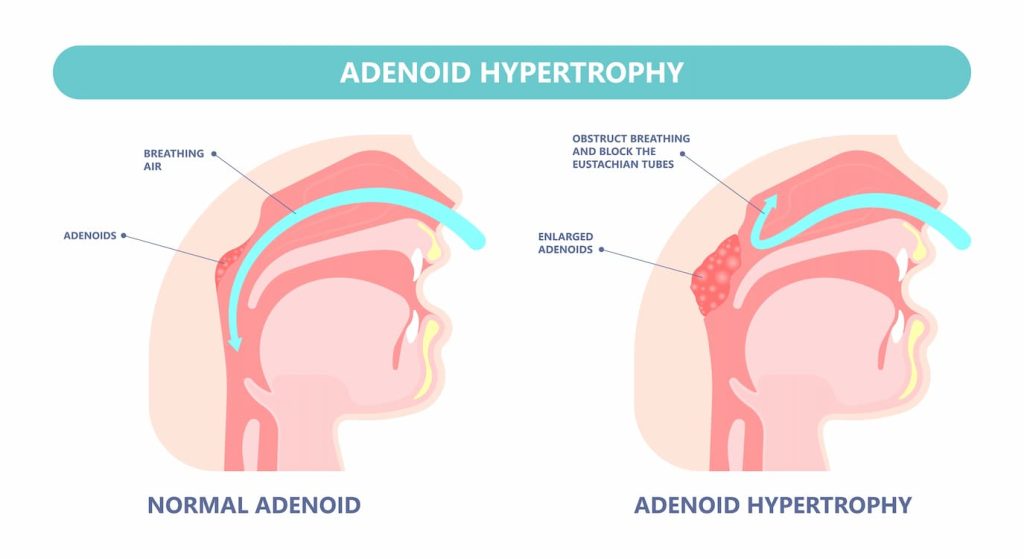
Adenoids are a small patch of soft tissue where the back of the nose meets the throat. They help fight germs in early childhood and usually shrink as a child grows. When they swell and stay larger than normal, this is called adenoid hypertrophy, or enlarged adenoids.
Enlarged adenoids can block airflow through the nose and affect the ears, leading to a blocked nose, mouth breathing, snoring and broken sleep. They are most common in children, though adults can have them too.
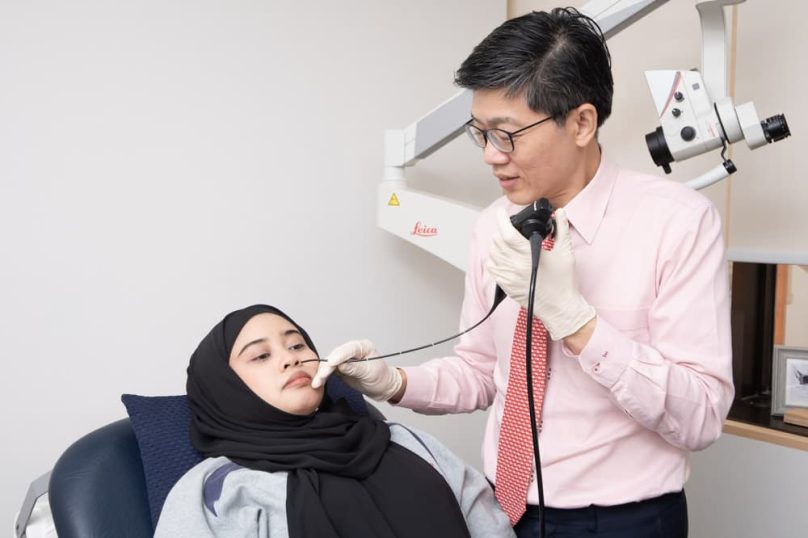
At 高级鼻窦和颅底中心, 王耀光医生 assesses enlarged adenoids and nasal blockage using a slim camera passed gently through the nose, then explains the treatment options that suit your situation.
What are enlarged adenoids?
Your adenoids sit high up behind the nose, above the roof of the mouth, so you cannot see them by looking in the mirror. They are made of lymphoid tissue, similar to the tonsils, and form part of the body’s early defence against infection.
Adenoids grow during the first few years of life and tend to shrink from around age five to seven. In some children they stay enlarged, either on their own or alongside enlarged tonsils. Doctors sometimes describe the degree of enlargement as mild, moderate or large, based on how much of the airway is blocked.
Most children outgrow it
Enlarged adenoids are common in childhood and often settle on their own as a child grows. Treatment is about easing symptoms that affect sleep, breathing and hearing, not rushing to surgery.
What causes adenoid hypertrophy?
Adenoids often swell as they respond to germs, which is a normal part of how they work. In some people they stay enlarged after repeated or ongoing irritation. Common reasons include:
- Frequent colds and upper respiratory infections, from viruses or bacteria
- Allergies and 过敏性鼻炎, which keep the lining swollen
- Ongoing inflammation in the nose and throat
- Irritants in the air, such as cigarette smoke
- A family history of enlarged adenoids
In children, enlarged adenoids are often linked to how the young immune system reacts to frequent infections. In adults they are less common and are more often linked to allergies, ongoing sinus problems or long lasting irritation.
Signs and symptoms of enlarged adenoids
Because enlarged adenoids block the nose, most signs are linked to breathing, sleep and the ears. You might notice:
- A blocked or stuffy nose that does not clear
- Breathing through the mouth, both day and night
- A runny nose or postnasal drip
- Snoring and noisy or restless sleep
- Pauses in breathing during sleep, which can point to obstructive sleep apnoea
- Daytime tiredness and poor quality sleep
- A nasal sounding voice
- 口臭
- A cough at night
- Repeated ear infections, ear pain, fluid behind the eardrum (glue ear) or reduced hearing
Symptoms in children and adults overlap, though children more often show mouth breathing, snoring and disturbed sleep. Trouble swallowing is more often linked to enlarged tonsils, which frequently swell at the same time as the adenoids.
Book a consultation to find out more.
Complications of adenoid hypertrophy
Most children with enlarged adenoids do well, especially once the problem is treated. Left unaddressed over time, enlarged adenoids can lead to other problems:
- Obstructive sleep apnoea, where breathing repeatedly pauses during sleep and lowers sleep quality
- Ongoing mouth breathing, which can dry the mouth and throat
- Repeated ear infections and glue ear, which may affect hearing for a time
- Chronic sinus problems from poor drainage
Long standing mouth breathing may also be linked to changes in how the face and jaw grow in children, sometimes called adenoid facies. Poor sleep can be linked to tiredness, trouble concentrating, changes in behaviour and difficulty at school. An ENT specialist can check for these and treat the cause early.
How are enlarged adenoids diagnosed?
Diagnosis starts with a conversation about symptoms, sleep and past infections, followed by a simple examination. To see the adenoids directly, Dr Ong passes a slim flexible camera through the nose, called a 鼻内窥镜检查. It is quick and done in the clinic.
Depending on the symptoms, a few other checks may help:
- A side X ray of the neck to show the size of the adenoids
- A hearing test and a check of the eardrum (tympanometry) if the ears are affected
- A sleep study (polysomnography) if snoring or pauses in breathing suggest sleep apnoea
An MRI scan is not part of routine assessment and is only used in specific situations.
Adenoid hypertrophy treatment
Treatment depends on how much the adenoids are affecting breathing, sleep and the ears. Many people improve without surgery, and mild cases are often watched over time.
Treatment without surgery
- Saline sprays or rinses to keep the nose clear
- A steroid nasal spray to reduce swelling
- Treatment for allergies, such as antihistamines, if allergy is a factor
- Antibiotics if there is an infection
- Monitoring symptoms when they are mild
Adenoid removal surgery (adenoidectomy)
When enlarged adenoids keep causing blocked breathing, poor sleep or repeated ear infections, removing them may be suggested. This is a common procedure called an adenoidectomy.
It is usually done as day surgery under general anaesthesia, through the mouth, so there are no cuts on the face. Some surgeons use an endoscope or coblation to remove the tissue. Most children recover within one to two weeks, with a sore throat and blocked nose for the first few days. If the tonsils are also enlarged, they may be removed at the same time.
In adults, surgery is less common and depends on the cause and symptoms.
Medisave claimable
Adenoid surgery is Medisave claimable when it is medically needed. Speak to our team about Integrated Shield Plan coverage and expected costs before your consultation.
Concerned about your child’s snoring or blocked nose? Book an assessment with Dr Ong Yew Kwang to find out what is causing it.
Do enlarged adenoids go away?
The tonsils and adenoids are both lymphoid tissue and often swell together, especially during childhood. When both are enlarged, this is known as adenotonsillar hypertrophy. Enlarged tonsils sit at the back of the throat and can add to snoring, disturbed sleep and trouble swallowing. Because the two are linked, an ENT specialist will usually check both, and in some cases remove them together in one operation.Book a consultation to find out more.
Enlarged tonsils and adenoids
The tonsils and adenoids are both lymphoid tissue and often swell together, especially during childhood. When both are enlarged, this is known as adenotonsillar hypertrophy. Enlarged tonsils sit at the back of the throat and can add to snoring, disturbed sleep and trouble swallowing. Because the two are linked, an ENT specialist will usually check both, and in some cases remove them together in one operation.
Book a consultation to find out more.
When to see an ENT specialist
It is worth seeing an ENT specialist if you notice any of the following in your child, or in yourself:
- A blocked nose or mouth breathing that does not improve
- Loud snoring, restless sleep or pauses in breathing at night
- Repeated ear infections, glue ear or a change in hearing
- Frequent sinus infections
An early check can find the cause and help prevent further problems with sleep and hearing.

王耀光博士
资深耳鼻喉科专家及鼻科医生
王耀光医生是一位经验丰富的耳鼻喉科专家,拥有超过20年的临床经验。他以优异的成绩毕业于都柏林大学三一学院,并于2008年完成耳鼻喉科专科培训,在全国毕业考试中荣获金奖。之后,他前往美国匹兹堡大学医学中心,接受了鼻科学和内镜颅底外科的亚专科进修培训。.
在进入私人执业领域之前,翁医生曾担任高级顾问和 临床服务主任 在 国立大学医院 (新加坡国立大学医院),他曾共同领导内窥镜颅底项目。他还持有…… 睡眠医学硕士 以及过敏学研究生证书。.
患者信息
What are enlarged adenoids?
How do I know if my child has enlarged adenoids?
Can adults have enlarged adenoids?
Do enlarged adenoids go away on their own?
Can enlarged adenoids cause sleep apnoea?
Can enlarged adenoids affect hearing?
Can allergies cause enlarged adenoids?
Is adenoid surgery safe?
How long is recovery after adenoidectomy?
Can enlarged adenoids come back after surgery?
What happens if enlarged adenoids are left untreated?
Contact Advanced Sinus and Skull Base Centre

If your child, or you, have a blocked nose, snoring or disturbed sleep that keeps coming back, enlarged adenoids may be the cause.
Dr Ong Yew Kwang can assess the adenoids with a gentle nasal camera check and explain whether monitoring, medication or adenoid removal is the right next step.
Book a consultation to find out more.