

鼻内镜检查
Understanding Nasoendoscopy Examination

What is Nasal Endoscopy?
Nasal endoscopy, also known as nasoendoscopy, is a minimally invasive in-clinic procedure that allows an ENT specialist to examine the inside of the nasal passages and sinus openings using a thin, flexible or rigid scope.
It is commonly performed to investigate persistent nasal blockage, recurrent sinus infections, nasal polyps, postnasal drip or unexplained nosebleeds.
The procedure is typically quick, well-tolerated and performed under local anaesthesia.
Read on to learn how nasal endoscopy is performed, when it is recommended and what to expect during the examination.
How Does Nasal Endoscopy Work?
Nasal endoscopy is a diagnostic procedure that provides a clear, magnified view of the internal nasal cavity.
A slender endoscope equipped with a light source and camera is gently inserted into the nostril. This allows direct visualisation of:
- The nasal septum
- The turbinates
- The sinus drainage pathways
- The back of the nasal cavity and nasopharynx
Unlike a simple nasal examination with a torch, endoscopy enables a detailed assessment of deeper structures that cannot otherwise be seen clearly.
It plays an important role in evaluating chronic nasal and sinus conditions.
What Can Nasal Endoscopy Detect
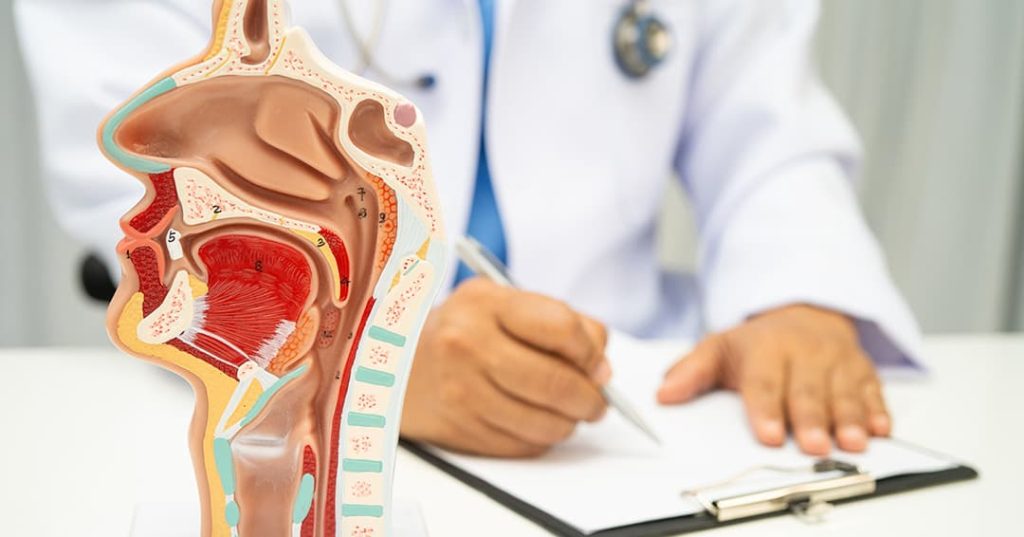
Nasal endoscopy allows direct and magnified visualisation of the internal nasal cavity and sinus drainage pathways. This enables a more accurate assessment compared to a routine external examination.
Conditions that may be identified include:
- Nasal polyps, which may appear as smooth, pale swellings within the nasal passages
- Septal deviation, including areas of structural narrowing that affect airflow
- Turbinate hypertrophy, where enlarged turbinates contribute to nasal obstruction
- Signs of chronic sinus inflammation, such as swelling, redness or thickened lining
- Pus or mucus within sinus openings, suggesting active infection or impaired drainage
- Structural narrowing or blockage of sinus pathways
- Tumours or abnormal growths, which may require further evaluation
By providing real-time visual assessment, nasal endoscopy offers valuable diagnostic information. It helps guide treatment decisions and may determine whether additional investigations, such as CT imaging of the sinuses, are necessary.
In many cases, it allows earlier and more precise diagnosis of the underlying cause of persistent nasal symptoms.

王耀光博士
资深耳鼻喉科专家及鼻科医生
王耀光医生是一位经验丰富的耳鼻喉科专家,拥有超过20年的临床经验。他以优异的成绩毕业于都柏林大学三一学院,并于2008年完成耳鼻喉科专科培训,在全国毕业考试中荣获金奖。之后,他前往美国匹兹堡大学医学中心,接受了鼻科学和内镜颅底外科的亚专科进修培训。.
在进入私人执业领域之前,翁医生曾担任高级顾问和 临床服务主任 在 国立大学医院 (新加坡国立大学医院),他曾共同领导内窥镜颅底项目。他还持有…… 睡眠医学硕士 以及过敏学研究生证书。.
Is Nasal Endoscopy Painful?
Nasal endoscopy is generally well tolerated and does not require sedation.
Most patients describe a sensation of pressure, fullness or mild discomfort rather than sharp pain. A topical local anaesthetic spray is applied before the procedure to reduce sensitivity and improve comfort during the examination.
You may feel the scope moving inside the nasal passage, particularly when it passes through narrower areas. Some patients also notice a brief urge to sneeze or watery eyes during the examination.
After the procedure, mild nasal irritation, slight watery discharge or minimal spotting may occur. These symptoms are usually temporary and settle within a short period.
How is Nasal Endoscopy Performed?

The procedure is performed in-clinic and usually takes only a few minutes:
- A topical local anaesthetic and decongestant spray is applied inside the nose to improve comfort and temporarily widen the nasal passages temporarily.
- The endoscope is then gently inserted into the nostril. The specialist systematically examines the nasal cavity and sinus openings while visualising the structures on a monitor.
- The scope is carefully withdrawn after examination. There are no external cuts or stitches involved.
Can Nasal Endoscopy Be Performed in Children?
Yes, nasal endoscopy can be safely performed in children when clinically indicated.
It is commonly used to assess persistent nasal blockage, suspected adenoid enlargement, recurrent sinus infections or prolonged nasal discharge.
With calm explanation and reassurance, most children tolerate the procedure well. Sedation is not routinely required. Suitability depends on the child’s age and level of cooperation.
Preparing for Nasal Endoscopy
In most cases, no special preparation is required prior to nasal endoscopy.
You may continue your usual medications unless otherwise advised. If you are taking blood-thinning medication, have frequent nosebleeds or have recently undergone nasal surgery, it is important to inform your doctor before the examination.
If you are experiencing significant nasal congestion, active bleeding or a recent upper respiratory infection, your doctor will advise whether the examination should proceed as planned.
As the procedure is performed in-clinic under local anaesthesia, no fasting or sedation is required.
What Happens Immediately After Nasal Endoscopy?
Once the endoscope is removed, you may experience temporary numbness inside the nose or throat from the local anaesthetic spray. This typically resolves within a short period.
Some patients notice mild nasal congestion or , slight irritation. Minor bleeding, if it occurs, usually settles quickly without intervention.
Your ENT specialist will review the findings with you immediately after the examination and explain any abnormalities detected. In selected cases, if tissue samples are taken for further analysis, results will be available once laboratory processing is complete.
You may resume normal daily activities straight away.
Cost of Nasal Endoscopy in Singapore
The cost of nasal endoscopy (nasoendoscopy) varies depending on the clinical setting and whether it is performed as part of a specialist consultation.
According to the Ministry of Health fee benchmarks in Singapore, the professional fee for the initial nasal endoscopy in the clinic is around $400 and from $200 for follow-up scopes.
This benchmark refers to the procedural professional fee. It may not include other associated costs such as specialist consultation fees, medications, consumables or prevailing GST where applicable.
The total bill may vary depending on individual clinical needs and whether additional investigations are required. A personalised fee estimate can be provided during consultation.
Exploring further assessment for persistent nasal or sinus symptoms?

If you have ongoing nasal blockage, recurrent sinus infections, postnasal drip or unexplained nasal discomfort, a nasal endoscopy can provide a clearer understanding of the underlying cause.
At Advanced Sinus & Skull Base Centre, a structured endoscopic examination allows direct visualisation of the nasal passages and sinus openings to guide accurate diagnosis and treatment planning.
Findings are explained clearly during the consultation so you understand the next steps in your care.
Appointments are available for evaluation and second opinions.