

Microscopic Ear Clearance
Quick Overview:
- Microscopic ear clearance, also called aural toilet, is an outpatient ENT procedure that cleans the ear canal under a microscope.
- Fine suction and small instruments remove debris, discharge, fungal debris, wax or trapped objects, and the specialist checks the eardrum at the same visit.
- Each ear takes 5 to 20 minutes.

Dr. Ong Yew Kwang
Senior Consultant ENT Specialist & Rhinologist
Dr Ong Yew Kwang is an experienced ENT specialist with over 20 years of clinical practice. He graduated with honours from Trinity College, University of Dublin and completed ENT specialist training in 2008, earning the gold medal in the national exit examination. He later undertook subspecialty fellowship training in Rhinology and Endoscopic Skull Base Surgery at the University of Pittsburgh Medical Center, USA.
Before entering private practice, Dr Ong served as Senior Consultant and Director of Clinical Service at the National University Hospital (NUH), where he co-led the endoscopic skull base programme. He also holds a Master of Medicine in Sleep Medicine and a Post-Graduate Certificate in Allergy.
What Is Microscopic Ear Clearance?
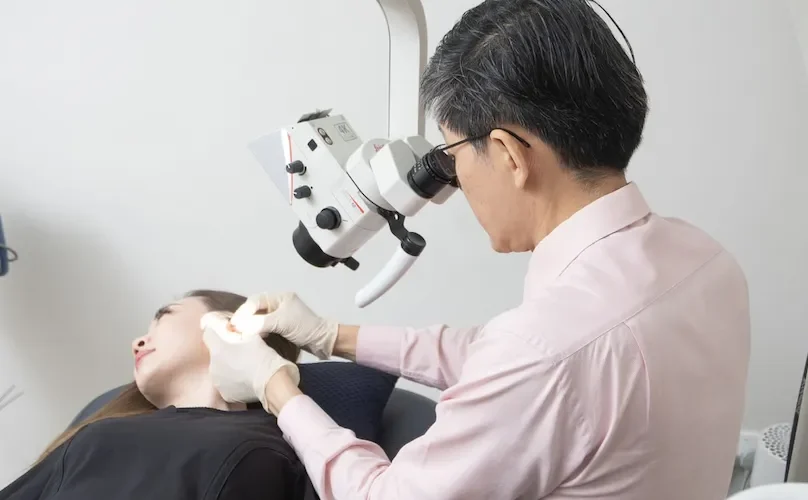
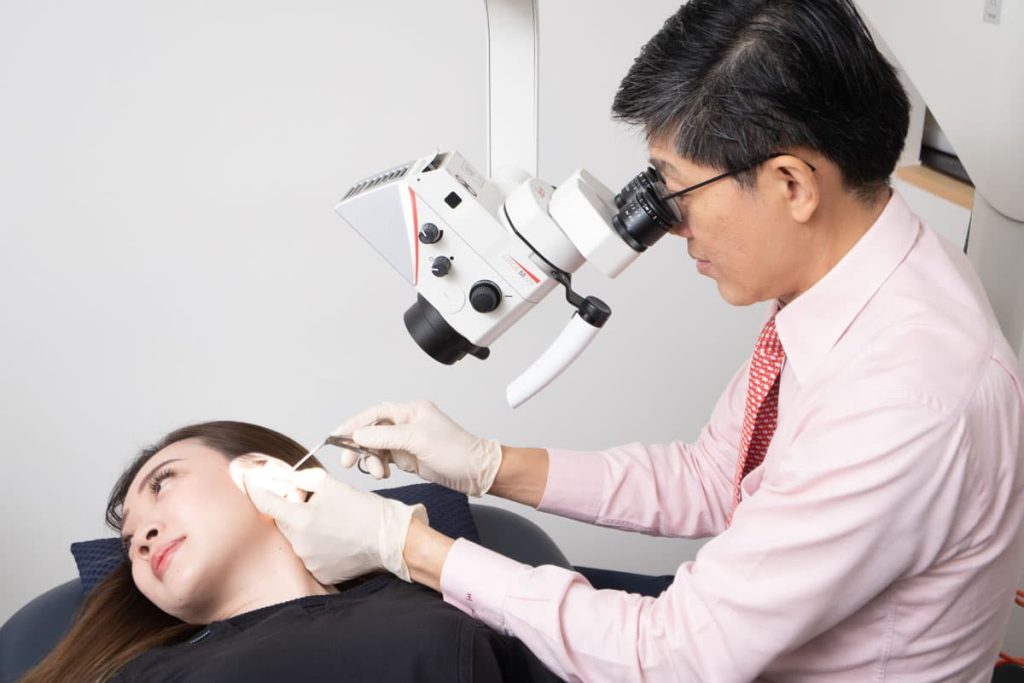
Microscopic ear clearance is the cleaning of the ear canal by an ENT specialist working through an operating microscope. The microscope magnifies and lights the canal all the way to the eardrum, and it leaves both of the specialist’s hands free to use a fine suction tube or small instruments.
The procedure clears five kinds of material from the ear canal:
- skin debris from an outer ear infection (otitis externa)
- discharge from the canal, or from the middle ear through a perforated eardrum
- fungal debris from a fungal ear infection
- hardened or impacted ear wax
- foreign objects stuck in the canal
You may also hear it called an aural toilet or microsuction. Because the canal is under magnification throughout, Dr Ong Yew Kwang can look at the eardrum as soon as it is clear and check for infection, a perforation or fluid behind it.
When Might You Need Microscopic Ear Clearance?
Microscopic ear clearance is advised when something in the ear canal is causing symptoms or stopping the doctor from seeing the eardrum. A healthy ear canal cleans itself, so an ear that feels comfortable and hears normally does not need routine cleaning.
People usually come in with one of these problems:
- a blocked or full ear, or hearing that has turned muffled
- itching, soreness or discharge from an outer ear or fungal ear infection
- a discharging ear with a known or suspected eardrum perforation
- grommets, previous ear surgery or a mastoid cavity that needs regular cleaning
- ear wax deep in the canal that softening drops have not cleared
- an object stuck in the ear
An ear can also feel blocked when the canal is clear. In that case the cause is usually behind
the eardrum, where congestion from allergic rhinitis or sinusitis can stop the ear from equalising pressure.
When to seek prompt care:
See a doctor without delay for severe ear pain, bleeding from the ear, pus with a fever, a sudden drop in hearing or dizziness that does not settle.
Why See an ENT Specialist for Ear Clearance?
An ENT specialist cleans the ear canal and examines the eardrum in one visit, which matters most for ears that are infected, perforated or have been operated on. Ear syringing at a GP clinic works well for many people with soft wax and a healthy eardrum. Doctors generally avoid putting water into an ear with a hole in the eardrum, grommets, an active canal infection or a history of surgery. Spa ear cleaning is cosmetic and involves no medical assessment.
| Microscopic ear clearance | Ear syringing (irrigation) | Spa ear cleaning | |
|---|---|---|---|
| Performed by | ENT specialist | Doctor or nurse, often in a GP clinic | Non medical therapist |
| Method | Suction and fine instruments under a microscope | Warm water flushes the canal | Varies; not a medical procedure |
| Eardrum examination | Yes, under magnification | Usually with an otoscope before and after | None |
| Perforations, grommets, mastoid cavities | Suitable | Generally avoided | Not suitable |
| Infected ears | Suitable; part of treatment | Generally avoided | Not suitable |
| Typically used for | Infected, sensitive or operated ears; hard or deep blockages | Soft wax in a healthy ear | Comfort and grooming |
What Happens During Microscopic Ear Clearance?
Microscopic ear clearance is done in the consultation room and takes 5 to 20 minutes per ear.
You do not need to fast.
- Dr Ong asks about your symptoms, past ear infections, ear surgery, grommets, diabetes and any blood thinning medicine, since these change how the ear is cleaned.
- You lie back on the examination chair with your head turned, so the ear canal lines up with the microscope.
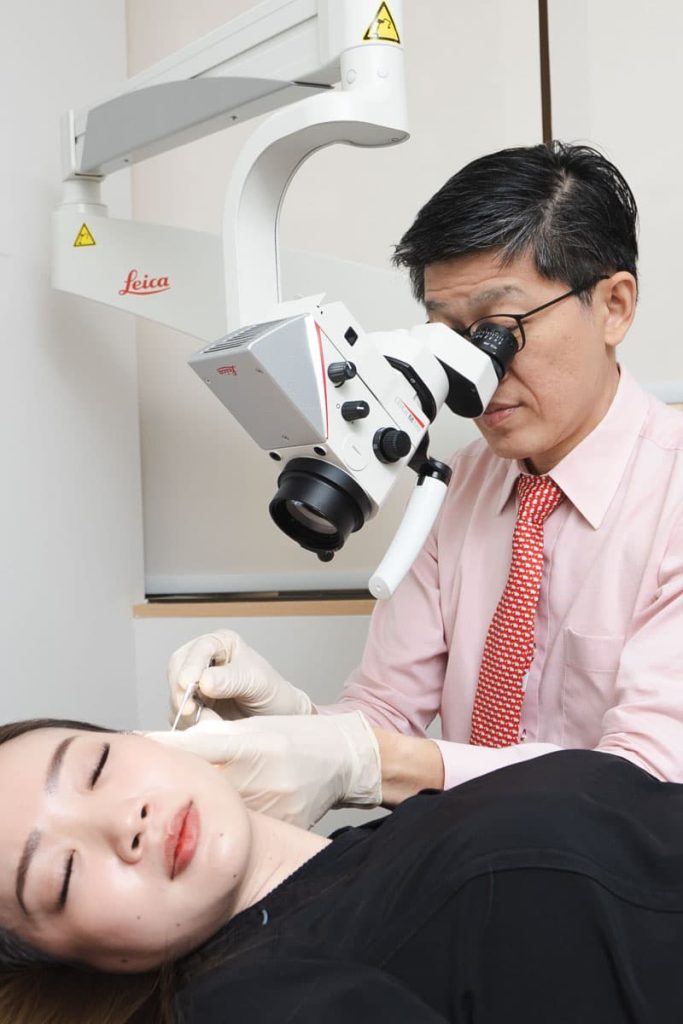
- A fine suction tube takes out soft material, while small hooks or forceps lift out firmer pieces. You can ask for a pause at any point.
- With the canal clear, the eardrum and canal skin are examined closely.
- Dr Ong explains what he found. Depending on the findings, he may prescribe ear drops for an infection, advise keeping the ear dry or arrange a hearing test at the clinic if symptoms continue.
Microscopic ear clearance takes place in the same consultation room as nasal endoscopy, so both can be done at one visit when the nose and ears need checking
Most patients need no preparation. For very hard wax, Dr Ong prescribes olive oil ear drops for 3 days before the clearance to soften it.
You can go back to your usual routine straight away. Keep cotton buds and other objects out of the ear, and keep water out of an infected or perforated ear if you have been told to. Call the clinic if pain, discharge or reduced hearing develops over the next few days.
Is Microscopic Ear Clearance Painful or Risky?
Microscopic ear clearance is not usually painful. The suction is loud, and the ear can feel cold or ticklish for a moment. An infected canal is tender, so cleaning it can sting briefly, and Dr Ong works in short stages to keep this manageable.
ENT UK’s guidance on microsuction describes four side effects, most of them brief:
- dizziness from the suction airflow, which settles within minutes
- temporary ringing in the ear or sensitivity to noise
- a small graze or spot of bleeding on the canal skin
- rarely, injury to the eardrum or a new infection
How Much Does Microscopic Ear Clearance Cost in Singapore?
Microscopic ear clearance is not Medisave claimable in most cases, so the fee is paid directly or through insurance. Medisave applies only to severe cases that need clearance under general anaesthesia. Some corporate insurance plans cover aural toilet.
The fee depends on whether one or both ears are treated, how much clearance is needed and whether it is done at the same visit as your consultation. Our clinic team will give you the expected fee before the procedure and can check whether your plan covers it.
Our Insurance Partners page lists the plans we work with.

Ear Feeling Blocked or Uncomfortable?

For an ear that feels blocked, itches or leaks, Dr Ong can examine it under the microscope, clear it and tell you what is causing the problem.
Patient Information
Is microscopic ear clearance the same as ear cleaning at a GP clinic or spa?
Can microscopic ear clearance be done during an ear infection?
Can I have a hearing test after microscopic ear clearance?
Can children have microscopic ear clearance?
In younger children, a blocked feeling or muffled hearing often comes from fluid behind the
eardrum, which enlarged adenoids can contribute to