

Allergic Rhinitis & Allergen Immunotherapy


Dr Ong Yew Kwang
Medical Director, Senior Consultant ENT Specialist
MB BCh BAO (Hon) (U. Dublin), MRCS (Edin), M Med (ORL) (NUS), M Med (Sleep Medicine) (U. Sydney), PGCert (Allergy) (U. Newcastle)
Published 19 January 2025 · Medically reviewed by Dr Ong Yew Kwang
Allergic rhinitis is highly prevalent in Singapore. It occurs in about 40% of our population, making the prevalence of rhinitis in Singapore among the highest in the world.
It is also strongly associated with asthma and both conditions often coexist:
One-third of patients suffer from asthma, while three-quarters of asthmatics have moderate to severe rhinitis. Uncontrolled moderate to severe cases also often result in poor asthma control.
Symptoms
Classic symptoms include nasal obstruction, rhinorrhea, sneezing and nasal itch.
Other symptoms include throat irritation, post-nasal drip and cough. Ocular symptoms such as eye itch and tearing (allergic conjunctivitis) are also not uncommon.
Sensitisation patterns
In Singapore, sensitisation to house dust mites (HDM) is present in 70 to 80% of the population.
More than 90% of Singaporeans with AR and/or asthma are sensitised to the HDMs (Dermatophagoides pteronyssinus, Dermatophagoides farina and Blomia tropicalis).
It has been shown that residency in Singapore increases HDM sensitisation as well.
Allergic rhinitis is not a trivial condition
While rhinitis is not associated with severe morbidity and mortality, it significantly decreases one’s quality of life and impairs quality of sleep which resulting in irritability, fatigue and decreased productivity at school or work.
Treatment
Effective management of allergies often requires a combination of avoidance measures, medication and allergen immunotherapy (AlT).
The Allergic Rhinitis and its Impact on Asthma (ARIA) international workgroup recommends oral antihistamines or intranasal steroid sprays as the first-line treatment.
AIT is the second-line treatment in those whom pharmacotherapy is ineffective, poorly tolerated or not desired. Its impact is more pronounced in those who are highly symptomatic.
Allergen
IMMUNOTHERAPY (AIT) AIT is the only disease-modifying treatment modality, unlike antihistamines or steroids.
Its mechanism of action includes activation of lgG antibodies, regulatory T cells, mediators and cytokines that attenuate allergic inflammation.
Clinical improvement can be observed as soon as a few weeks of administration. It has an added benefit of sustained symptom relief even after completion of treatment, which is typically 3 to 5 years.
Good compliance with treatment is required for optimal results.

There are currently two approaches to AlT: subcutaneous immunotherapy (SCIT) and sublingual immunotherapy (SLIT).
The subcutaneous route is the traditional method, but it carries a small risk of anaphylaxis, which can be life-threatening.
The sublingual route is gaining in popularity due to the convenience of home administration as well as fewer and less severe adverse effects.
A recent multicenter randomised double-blind, placebo-controlled trial showed that HDM SLIT reduced symptoms and medication usage in patients with moderate to severe HDM-induced rhinitis.
In 2017, we performed 884 SPT and 91 RAST tests; SPT is popular as it is a quick test, with results readily available after about 30 minutes. RAST is performed for those who are unable to be weaned off antihistamines.
In SLIT, the allergen extract is prepared in either a spray or tablet form. It is placed under the tongue for 1 to 2 minutes and then swallowed.
This is done daily over a course of 3 to 5 years to develop lasting immunity. The benefit of the tablet form is that it obviates the need for storage in the refrigerator.
SLIT has a good safety profile. Some of the side effects include throat itching, local erythema or oedema, which can be managed with pre-administration of antihistamines. It is suitable for children over the age of 5.
Based on a recent study on the use of SLIT in asthma patients, the 2017 Global Initiative for Asthma (GINA) guideline now recommends the addition of SLIT in adult patients with HDM-induced rhinitis and allergic asthma who have frequent exacerbations despite inhaled corticosteroids, provided that the FEVI is more than 70% predicted.
Allergy Assessment at Advanced Sinus & Skull Base Centre
Advanced Sinus & Skull Base Centre provides evaluation and treatment for adults and children with allergic rhinitis and other nasal conditions. Allergy testing may be performed to identify specific allergens and help guide appropriate treatment.
Diagnostic testing may include skin prick testing (SPT) or blood tests, depending on the individual patient. Following assessment, treatment may include medication, allergen avoidance measures and allergen immunotherapy for suitable patients
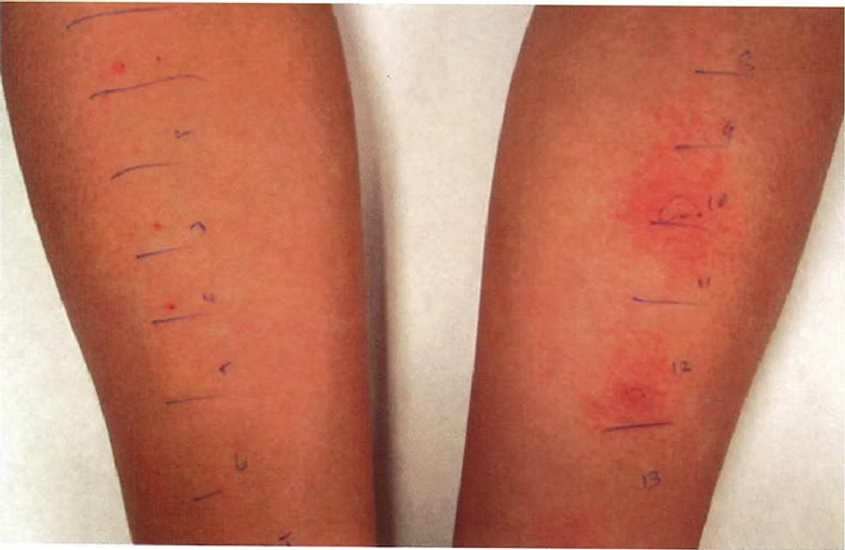
Following identification of the offending allergens, our rhinitis specialist will discuss with patients the natural history of the condition and recommend appropriate avoidance measures to reduce allergen exposure (Figure 2).
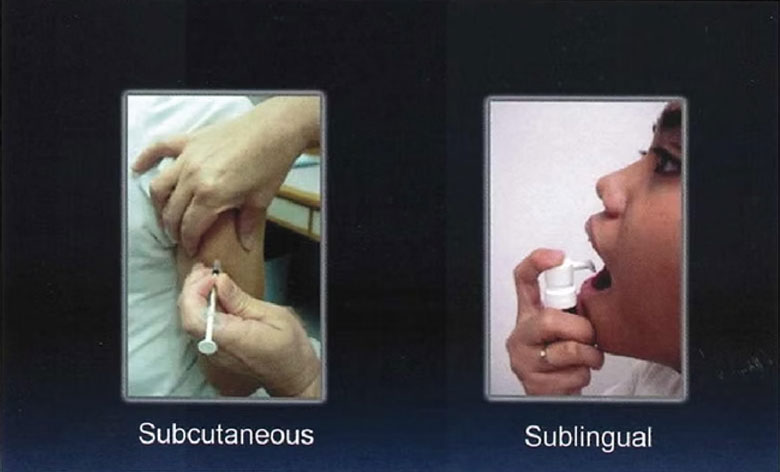
For suitable candidates in whom medication are ineffective or poorly tolerated, or who do not wish to be on long-term medication, the option of AIT (Figure 3) is introduced. There are currently 28 patients undergoing SLIT therapy and 3 undergoing SCIT therapy.
Amongst those undergoing SLIT, 70% of patients have reported improvement in their quality of life, as measured by the popular questionnaire scores. These patients undergoing AIT are continuously reviewed and monitored.